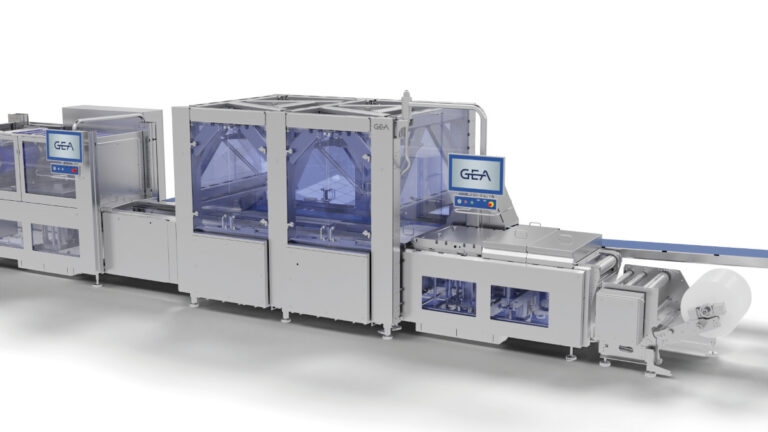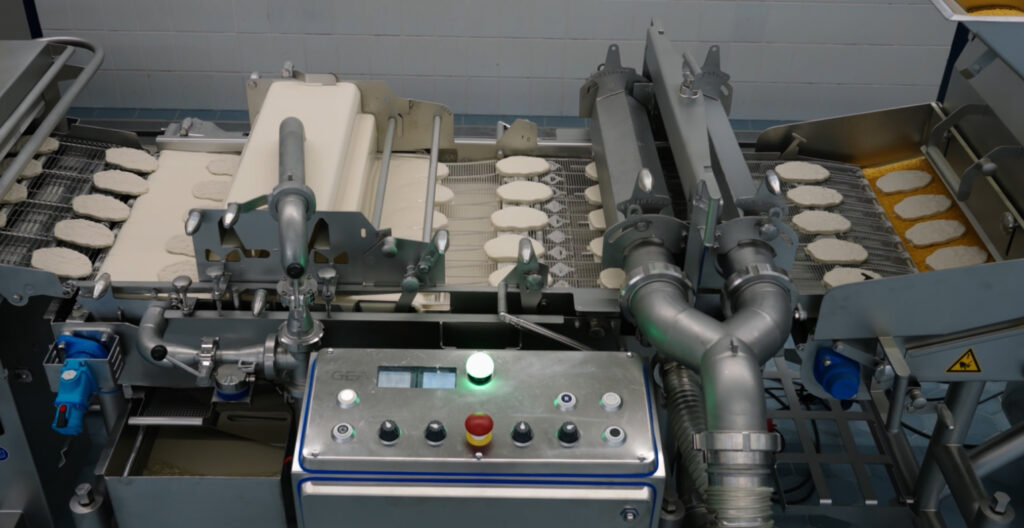
GEA has introduced the GEA ProCoater, a wet batter coating machine whose patent-pending guided return-flow system reduces air entrainment and foam formation in the batter by up to 80 percent. Designed to stabilise batter flow and give an even coating, it applies wet batter to poultry, pork, fish and cheese products as well as plant-based and hybrid products, and comes in working widths of 400, 600 and 1,000 mm.
The calmer batter flow produces a more even curtain, which reduces gaps and irregularities in the coating and keeps coating performance stable over long production runs and across a wide range of viscosities. Adjustable scrapers allow fine corrections without stopping the line, and air knives blow off excess batter evenly across the full belt width for an exact batter pick-up and a uniform product appearance.
An optimised product transfer gives an even handover onto the coating section. A patent-pending hold-down plate, together with an optional device that feeds a layer of batter to the underside, ensures that the underside of each product is fully coated and holds products firmly in position during coating, so they do not float or slip. With these features, the wet batter coating process can be controlled from start-up to the end of production.
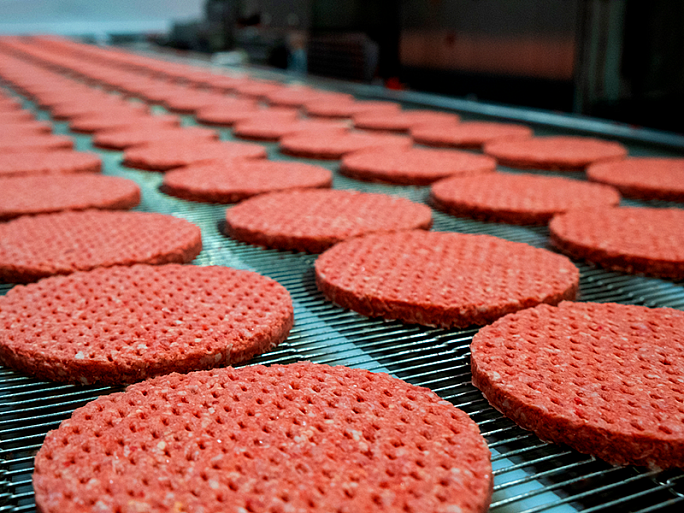
An even application of batter reduces rework, product rejects and unnecessary use of product and batter, while efficient batter use improves yield and line cleanliness. Breaded convenience products remain a growing segment, driven among other things by demand for crisp textures and new formats such as plant-based and hybrid foods, while manufacturers face cost pressure, complex batter systems, stricter quality requirements and a limited supply of skilled operators. GEA also offers application advice, food technology support and access to its technology centres, where manufacturers can test products, validate processes and develop new breaded products under near-production conditions.
Ben Kop, application specialist at GEA, sums up the operating gain: “The stabilised wet batter flow and the simplified adjustment help operators achieve reproducible results with fewer manual interventions.”